Knees are one of the joints we mostly use in our daily lives, but nowadays they have become so common that we have started taking them for granted. They represent one of the most complex joints in our bodies because of their structural makeup and how they allow us to perform many physical activities. However, the complicated structure also means that even slight actions taken by the individual to misalign, strain, or put pressure on the knees can literally cause discomfort or pain.
Many people ignore their knee pain in the beginning because they think it is temporary or due to too much exercise, but in reality, it is not that normal. This persistent discomfort can increase in intensity with continued inattention resulting in increased restrictions on mobility and ultimately affecting the ability to perform every day chores such as climbing stairs, sitting down, or even walking without pain. Therefore, paying close attention to your knees whenever experiencing pain or discomfort can lead to early identification of a problem and possible prevention of further deterioration of the joint as well as improving your overall joint condition. After having the know-how of knee pain, let’s understand the probable reasons of it.
Common Causes of Knee Pain
Osteoarthritis
Osteoarthritis is a degenerative joint disease that develops owing to gradual wear of the cartilage surrounding your knee. As your cartilage wears down, you lose the cushioning that’s responsible to protect your bones from friction. This friction causes your bones to rub against each other, eventually resulting in stiffness, swelling, and pain. While osteoarthritis primarily affects older individuals, being overweight, having had past injuries, and even being involved in activities requiring repetitive motion can all lead to an earlier onset of osteoarthritis in younger individuals.
Ligament Damage
A second major cause of knee pain is ligament damage. In particular, damage to the anterior cruciate ligament (ACL) or medial collateral ligament (MCL) that can occur from sudden twisting movements, sports injuries, or even during high-impact activities like running or jumping. These types of injuries are generally accompanied by immediate swelling and pain, along with a sensation that the knee is unstable and unable to bear weight. That can be very painful.
Patellofemoral Pain Syndrome
Patellofemoral pain syndrome , also known as runner’s knee, is a common cause of pain and discomfort associated with the area surrounding and behind the kneecap. But why does it occur? Runner’s knee occurs when the patella does not slide smoothly along its groove. It generally occurs due to muscle imbalances and improper movement patterns.
Tendinitis
Tendinitis caused by repetitive stress like running, jumping, or heavy training generally results in a painful inflammation of the tendons, especially the patellar tendon. If ignored, this discomfort further gets worse during activity.
Damage of Cartilage
When the rubbery cartilage that cushions the shinbone and thighbone gets damaged it leads to meniscus tear and can also be another common cause. These tears can develop gradually due to aging or abrupt twisting. Symptoms may also include locking, clicking, or a sensation of something “catching” inside the joint. Let’s understand the symptoms in detail.
Symptoms You Shouldn’t Ignore
Recognizing symptoms early can prevent further complications. The location and scope of knee pain may vary, and it completely depends on the cause of the problem. Here are some of the most noticeable signs and symptoms of knee pain:
- Limited Flexibility
- Difficulty in bending & straightening
- Swelling and stiffness
- Redness and warmth to the touch
- Weakness or instability
- Popping or crunching noises
- Grinding or clicking sounds
- Inability to fully straighten the knee
If you are having a sense of feeling that the joint may get collapsed, it is also an important symptom indicating ligament injuries or muscle weakness. Now that you have understood symptoms of knee pain let’s explore what are the key indicators to diagnose knee pain.
How Knee Pain Is Diagnosed
A proper diagnosis is very important to identify the root cause of knee pain. Experienced & certified physiotherapists along with medical experts proceed with a physical evaluation in which they analyse following:
- Posture assessment
- Gait (walking pattern)
- Muscle strength
- Joint alignment
- Flexibility
Understanding a patient’s lifestyle, every day habits, exercise routine if any, and proper history of previous injuries plays a very important role in identifying the source of pain instead of addressing their symptoms. If it is required, then following Imaging techniques can be of great help in detecting ligament tears, bone degeneration or even a cartilage loss:
- X-rays
- MRI scans
- Ultrasound
Proven Physiotherapy Treatments for Knee Pain
Strength Training
Strength training is a primary method of physiotherapy that is absolutely non-invasive. Strengthening the muscles surrounding the knee helps provide better stability to your knee while reducing the amount of stress placed on the joint. By strengthening, following your muscles will provide more stability and help create the structure necessary for Pain-Free Movement:
- Quadriceps
- Hamstrings
- Calf muscles
- Glutes,
Manual Therapy
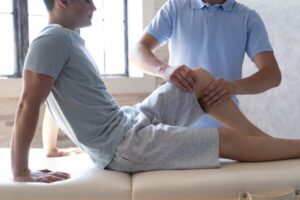
A second effective form of Physiotherapy is Manual Therapy. It involves a variety of treatment methods including:
- Joint Mobilisation
- Soft Tissue Manipulation
- Targeted Massage Techniques
These all reduce stiffness, promote Healing, and Increase Blood Circulation.
Mobility exercises and stretching routines
Incorporating mobility exercises in your stretching routines is very important. Because they help to maintain
- Proper flexibility
- Reduce muscle tightness
- Prevent compensatory movement patterns that may aggravate the problem.
Taping and bracing strategies
You can also make the most of taping and bracing strategy. These are often used to:
- Support knee alignment
- Relieve strain
- Assist movement during rehabilitation
Cupping Therapy
In fact, in some treatment plans, cupping therapy and soft tissue release techniques are used to improve the:
- Blood circulation
- Reduce muscle tension
- Accelerate recovery
Posture correction and gait retraining
This training is important to make sure that everyday activities like walking, standing, and exercising, do not put unnecessary pressure on your knee joint. These corrective strategies also help in eliminating biomechanical errors that eventually lead to recurring pain.
Conclusion
Knee pain should not restrict the movements nor it should diminish quality of life you live. All you need is the right awareness, early intervention, and proper physiotherapy treatment. By adopting healthy lifestyle habits you can manage knee pain effectively. Physiotherapy for knee pain is very important to recover faster and for the long term. By strengthening supporting muscles, correcting body posture, staying active all the time, and adopting a holistic approach you can restore the comfort, mobility, and confidence. Looking for best physiotherapists in Mohali? Book your physiotherapy session at Theronation Healthcare!